
A hard or painful spot on the sole may be a corn, but it may have another cause. A corn usually forms in response to repeated pressure or friction. A wart is caused by a virus and needs different management. A description or photograph alone is not always enough to tell them apart safely.
What is commonly associated with a corn
Corns and calluses appear at points of stress or friction, often related to a shoe, walking, or a bony prominence. Care does not end with the removal of the hard skin; the source of the pressure also needs to be addressed.
Why a wart needs a different approach
A wart is a viral lesion. Cutting it incorrectly or using caustic products can injure the skin and delay diagnosis. If its nature is unclear, the safe next step is referral to a dermatologist or another appropriate healthcare professional.
What the professional assesses
The location, distribution of hard skin, relationship to pressure and appearance of the surrounding tissue help with the initial assessment, but do not establish a diagnosis on their own. A plantar wart may interrupt the natural lines of the skin or show small dark spots, but appearances vary and these features should not be used for self-diagnosis. Pain alone cannot distinguish the two either.
When to avoid home treatment
People with diabetes, poor circulation, neuropathy or reduced sensation should not treat corns themselves. Bleeding, discharge, severe pain, rapid change, wound or signs of infection need prompt medical evaluation. Avoid blades, scissors and strong keratolytic products without guidance.
Why the cause matters
If only the superficial hard skin is removed without reducing the repetitive pressure, the spot may return. The shoe, its fit, the activity and the weight-bearing pattern need discussion. The goal is not aggressive removal but safe relief and a realistic prevention plan. For suspected warts the course is different and a medical diagnosis may be needed before any intervention.
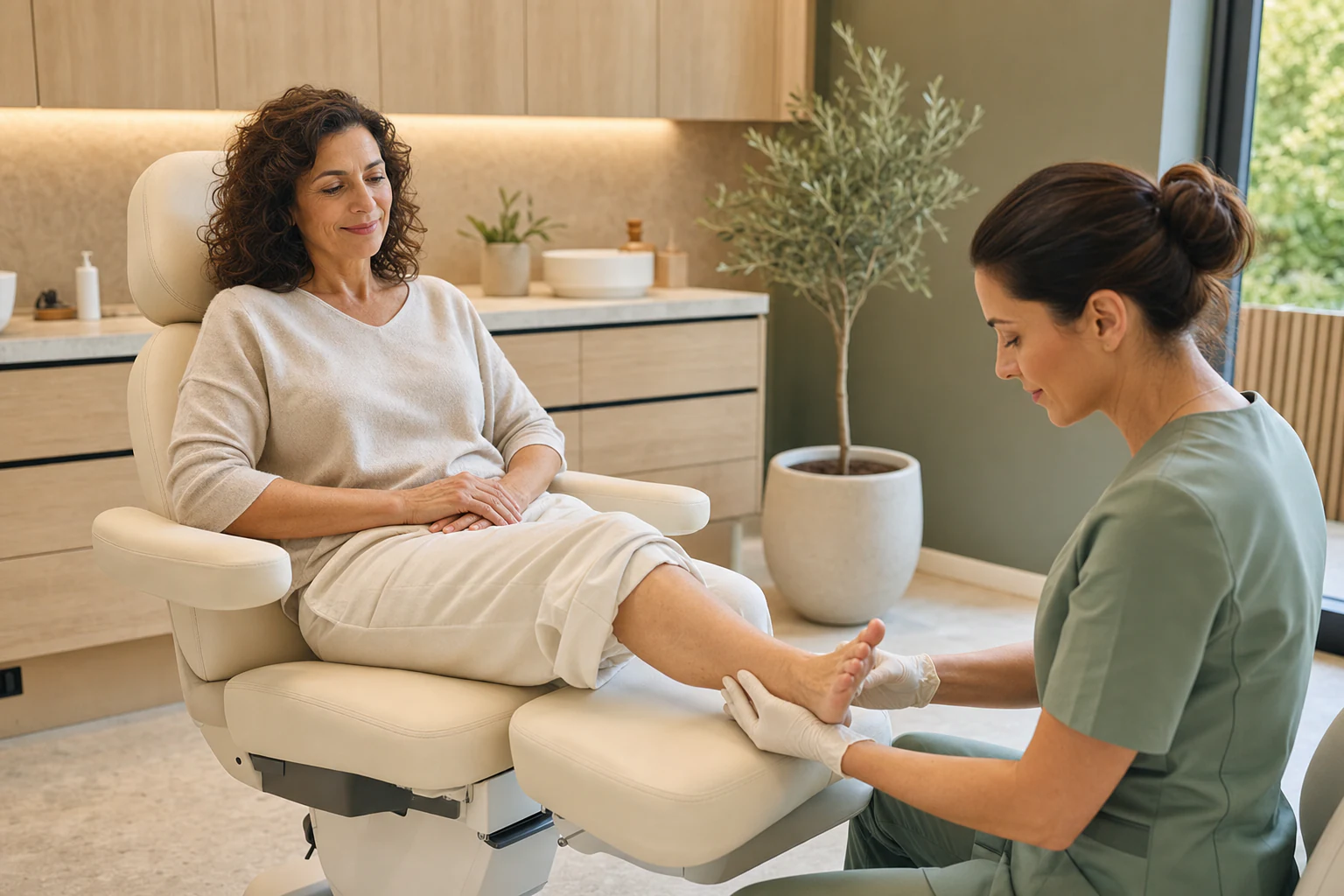
What happens at your appointment
We start by taking your history and visually assessing the area. If it appears to be simple hard skin, we plan gentle care and ways to prevent repeated pressure. If there is uncertainty or a sign of a medical condition, cosmetic or foot care treatment stops and an appropriate referral is recommended. Until your appointment, keep the area clean and dry and choose footwear that does not press on it. If there is a wound, warmth, swelling or discharge, contact an appropriate healthcare professional. This information is educational and does not replace an examination.